
DOTA 2: The Philosophy of Eternal Conflict
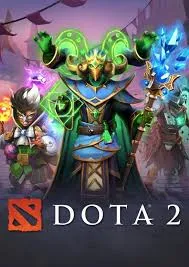
DOTA 2 is often portrayed as a competitive arena, a masterpiece of balance and strategy, a game defined by its battles and rivalries. But beneath the surface of drafting, teamfights, and meta evolution lies a far more profound internal architecture: a fictional universe built entirely on the philosophy of conflict—endless, cyclical, and inescapable. DOTA 2 is not simply a battleground; it is a meditation on war itself, on the nature of power, and on how identity forms in spaces where conflict is the only constant. This article explores that deeper theme, focusing on the intertwined stories of Radiant, Dire, and the heroes trapped in their perpetual struggle.
DOTA’s world does not offer peace. Instead, it ritualizes conflict, treating war as an eternal truth rather than an aberration. “IT BEGINS,” the Ancients whisper, as if awakening a cycle older than any hero. The map is not only a battlefield; it is a stage that demands conflict to sustain existence. In this setting, heroes do not merely fight—they embody the philosophies and ideologies that shape the universe’s understanding of power. Every match becomes a retelling of an ancient war that cannot conclude. The same characters die, revive, and fight again, locked in an endless recurrence reminiscent of mythological cycles.

For players, the repetition feels like gameplay. For the heroes, it is destiny. They are resurrected not by mechanics but by the Ancients’ will—a symbolism that suggests control, manipulation, and the erasure of free will. The Ancients are not gods; they are embodiments of conflict. Their hunger for dominance shapes every war, and heroes become extensions of that hunger. DOTA 2 communicates this existential idea subtly through voice lines, lore fragments, and environmental storytelling.
The Radiant and Dire are not simply “two sides.” They are metaphysical opposites—creation versus corruption, growth versus decay. Yet neither side is fully moral or fully evil. Radiant is alive but invasive; Dire is deathly but purposeful. Their war resembles the dualism of yin and yang, but stripped of harmony. It is dualism in rupture, where balance is impossible. The game’s world insists that one side must eventually dominate, but since every match resets the timeline, domination never arrives. This creates a mythos where war itself is the protagonist.
The Radiant’s aesthetic is organic, green, vital. Its magic resembles nature’s growth, healing, and resilience. Yet beneath that beauty lies aggression: Radiant spreads, consumes, overtakes. If the Dire is rot, the Radiant is overgrowth. Both destroy. Both devour. Heroes aligned with Radiant often embody purity or life magic, but purity in DOTA always hides something darker—self-righteousness, zealotry, or the arrogance of “natural order.” The Radiant’s philosophy is survival through expansion, even if that expansion suffocates all else.
The Dire, by contrast, is decay incarnate—red, jagged, burning. It represents entropy, hunger, and transformation through destruction. The Dire’s corruption mutates everything it touches, yet corruption here is not evil; it is evolution through collapse. A world that never decays cannot change. Many heroes tied to the Dire—such as the demons, undead, and forgotten gods—follow this worldview. Their purpose is not random violence; it is the philosophical belief that destruction is necessary for rebirth, a concept resembling the mythology of destructive creation.
Between these opposing philosophies stand the heroes, who represent the diversity of identity within conflict. Each hero’s backstory situates them at a crossroads of personal desire and the Ancients’ influence. Some fight willingly, others reluctantly, others without understanding why. But the Ancients distort motivations, drawing heroes into a war that transcends morality. For example, heroes like Silencer and Anti-Mage define themselves entirely through opposition; identity becomes reaction, not creation. Others, like Terrorblade, seek to reshape the universe in their own image, turning the eternal war into a tool for self-fulfillment.
Certain heroes reveal how conflict forms identity through suffering. Shadow Fiend, stripped of humanity, becomes pure hunger for souls—a metaphor for war consuming the self. Spectre exists as pain personified, a being whose existence is defined not through emotion but through agony. Meanwhile, heroes like Spirit Breaker or Legion Commander embody the war’s militaristic ideology, becoming soldiers whose sense of self collapses into duty. DOTA 2 uses these characters to show how war flattens complexity into singular obsession.
The architecture of the map reinforces this philosophy. The river divides not land, but worldview. Jungles reflect fear and possibility—neutral space where heroes seek strength, yet never belonging to either side. The lanes symbolize inevitable confrontation, paths where identity collides with opposing ideology. Each building stands as a metaphor: towers as guardians of order, barracks as the heart of civilization, and the Ancient as the nucleus of existential meaning. When a barracks falls, the faction loses more than units; it loses cultural memory. The destruction is symbolic, not mechanical.
Even the creeps embody cyclical suffering. They march toward death without question, like soldiers in an endless dynasty war. Their existence is short, purposeful, and tragic. They represent the countless unnamed lives lost in ideological battles—a subtle critique of how war erases individuality. And Roshan, the ageless beast in the river’s dark pit, serves as the embodiment of neutral, cosmic power—untouched by ideology, feared by both sides. His respawn cycle is the clearest symbol of the universe’s refusal to allow permanence.
DOTA 2’s time structure reinforces its philosophical underpinnings. Every match resets. Every death reverses. No action is permanent. This creates a universe where progress does not exist; there is only iteration. The war is a loop. Heroes are reincarnated into roles they cannot escape. The inability to “finish” the story mirrors the idea that conflict is an eternal force shaping all things. Like mythological epics where gods fight endlessly, the heroes of DOTA 2 operate within a narrative framework where resolution is impossible.
The game’s language highlights this worldview. Voice lines often express fatalism, inevitability, and acceptance of war’s permanence. Axe lives for battle as if nothing else exists. Invoker considers conflict trivial but unavoidable. Phantom Assassin kills in the name of prophecy, unable to break free from destiny. Even comedic heroes such as Ogre Magi reinforce the theme—his randomness symbolizes chaos as a natural law of the world. Humor becomes a coping mechanism for infinite war.
DOTA’s broader storytelling approach embraces ambiguity. It offers fragments, not answers. Heroes contradict one another. Histories overlap imperfectly. This structure is intentional—it mimics how war distorts memory and erases coherent narrative. A world built on conflict cannot maintain a stable history. The lack of canonical clarity forces players to piece together meaning from unreliable voices, a subtle commentary on how war transforms truth into propaganda.
By placing players inside this cyclical, contradictory universe, DOTA encourages them to reflect on conflict not as a temporary condition but as an existential one. Every match is a retelling of humanity’s oldest story: two forces locked in a duel where neither deserves victory, but both demand it. And in the ruins of fallen towers, the player sees not triumph, but repetition—an admission that war never ends, only resets.

Yet DOTA 2 also acknowledges resilience. Heroes fight not because they believe victory is permanent, but because struggle defines them. There is beauty in effort, meaning in resistance. The war may be eternal, but within it, characters create purpose. Even if identity is shaped by conflict, it is still identity. Even in destruction, there is transformation. This is why the game resonates so deeply—it captures the human tension between despair and defiance.
In the end, DOTA 2 is not a story about Radiant or Dire, victory or defeat. It is a story about existence shaped by conflict, identity carved by power, and the unbreakable cycle that binds them. Through its lore, mechanics, and symbolic landscape, the game becomes a living myth—one where war is not the failure of peace, but the engine of the universe.
DOTA 2’s deepest narrative achievement lies in its portrayal of conflict as a philosophical force—destructive, cyclical, and essential. Through its heroes, map, factions, and eternal resets, the game reveals how war shapes identity, erases meaning, and yet inspires resilience. It transforms every match into a reflection on ambition, ideology, suffering, and renewal. In DOTA’s world, conflict is not a flaw; it is the foundation of existence, a cosmic truth from which neither heroes nor players can escape.