






Introduction
RimWorld: Odyssey expands the core colony-simulation experience into a broader journey-focused survival strategy game. Building on RimWorld’s deep systems of psychology, resource management, and emergent storytelling, Odyssey emphasizes long-distance travel, mobile colonies, planetary exploration, and survival beyond a single static base. Players are no longer just defending one settlement—they are managing people, resources, and decisions across an unfolding journey filled with risk and opportunity.
This guide is designed to help both new and experienced RimWorld players adapt to the Odyssey-style gameplay. From early survival choices to mid-journey logistics and late-game optimization, these tips and guides focus on practical strategies that reduce colony collapse and increase long-term success.
Understanding the Core Gameplay Shift in Odyssey
Unlike traditional RimWorld gameplay that revolves around a fixed base, Odyssey introduces movement as a core mechanic. Your colony’s survival now depends on planning routes, timing travel, and managing supplies across changing environments.
This shift makes flexibility more important than perfection. Colonists must adapt to temporary shelters, unfamiliar biomes, and unpredictable events. Static base optimization matters less than mobility, resilience, and redundancy.
Players who embrace the journey mindset—rather than clinging to base-building habits—will find Odyssey more rewarding and less punishing over time.
Early Game Survival and Starting Decisions
The early phase of RimWorld: Odyssey sets the tone for the entire run. Choosing colonists with versatile skills is more valuable than hyper-specialists. Skills like construction, plants, medicine, and social play a constant role throughout the journey.
Starting equipment should prioritize portability. Lightweight weapons, compact food sources, and multipurpose tools outperform bulky infrastructure. Overloading early can slow movement and increase risk during travel events.
Avoid rushing forward too quickly. Establish short-term stability before committing to long journeys. Early patience reduces catastrophic losses later.
Managing Colonist Needs on the Move
Travel places constant pressure on colonist mood and health. Sleep quality, recreation, and nutrition are harder to maintain without permanent structures.
Rotating rest schedules and prioritizing basic comforts—such as bedrolls, simple recreation items, and mood-boosting food—can prevent mental breaks. Even small morale bonuses compound over time.
Health management becomes critical. Minor injuries or untreated illnesses can spiral into major threats when far from proper facilities. Always plan medical supplies ahead of travel.
Resource Planning and Weight Management
In Odyssey, carrying too much is as dangerous as carrying too little. Every item has an opportunity cost that affects travel speed, stamina, and encounter risk.
Focus on essentials:
- Compact food with long shelf life
- Medicine and herbal backups
- Construction materials for temporary shelters
- Spare clothing for biome changes
Avoid hoarding early. You can scavenge, trade, or craft along the way. Efficient loadouts keep your caravan flexible and responsive.
Temporary Bases and Campsite Strategy
Temporary bases are a defining feature of Odyssey gameplay. These short-term settlements should be quick to build, easy to abandon, and defensible.
Use simple layouts with minimal walls and clear escape routes. Avoid investing emotionally or materially in locations meant to be left behind. Think of camps as tools, not homes.
Prioritize essential infrastructure only: beds, cooking, storage, and basic defenses. Anything beyond that risks wasted time and resources.
Combat and Threat Management During Travel
Travel introduces unpredictable combat encounters. Ambushes, wildlife attacks, and hostile factions can strike when colonists are tired or poorly positioned.
Positioning matters more than firepower. Terrain, cover, and retreat options should guide your decisions. Avoid unnecessary fights—escape is often the smarter choice.
Weapon selection should balance damage with reliability. Consistent, easy-to-maintain weapons outperform rare but fragile gear during long journeys.
Trading, Diplomacy, and Faction Relations
Odyssey encourages interaction with the wider world. Trading settlements and friendly factions become lifelines rather than optional side content.
Maintaining good relationships opens access to food, medicine, and replacement colonists. Even small goodwill gestures can pay off later during emergencies.
Avoid burning bridges unless necessary. Hostile factions increase encounter risk and limit safe travel routes across the map.

Psychological Stability and Mental Break Prevention
Long journeys amplify RimWorld’s psychological systems. Isolation, exhaustion, and loss accumulate over time.
Rotate workloads to prevent burnout. Allow downtime even when resources are tight. A single mental break can derail an entire caravan.
Monitor traits closely. Colonists with volatile personalities require extra attention, while steady-minded pawns become anchors for group morale.
Mid-Game Progression and Technology Choices
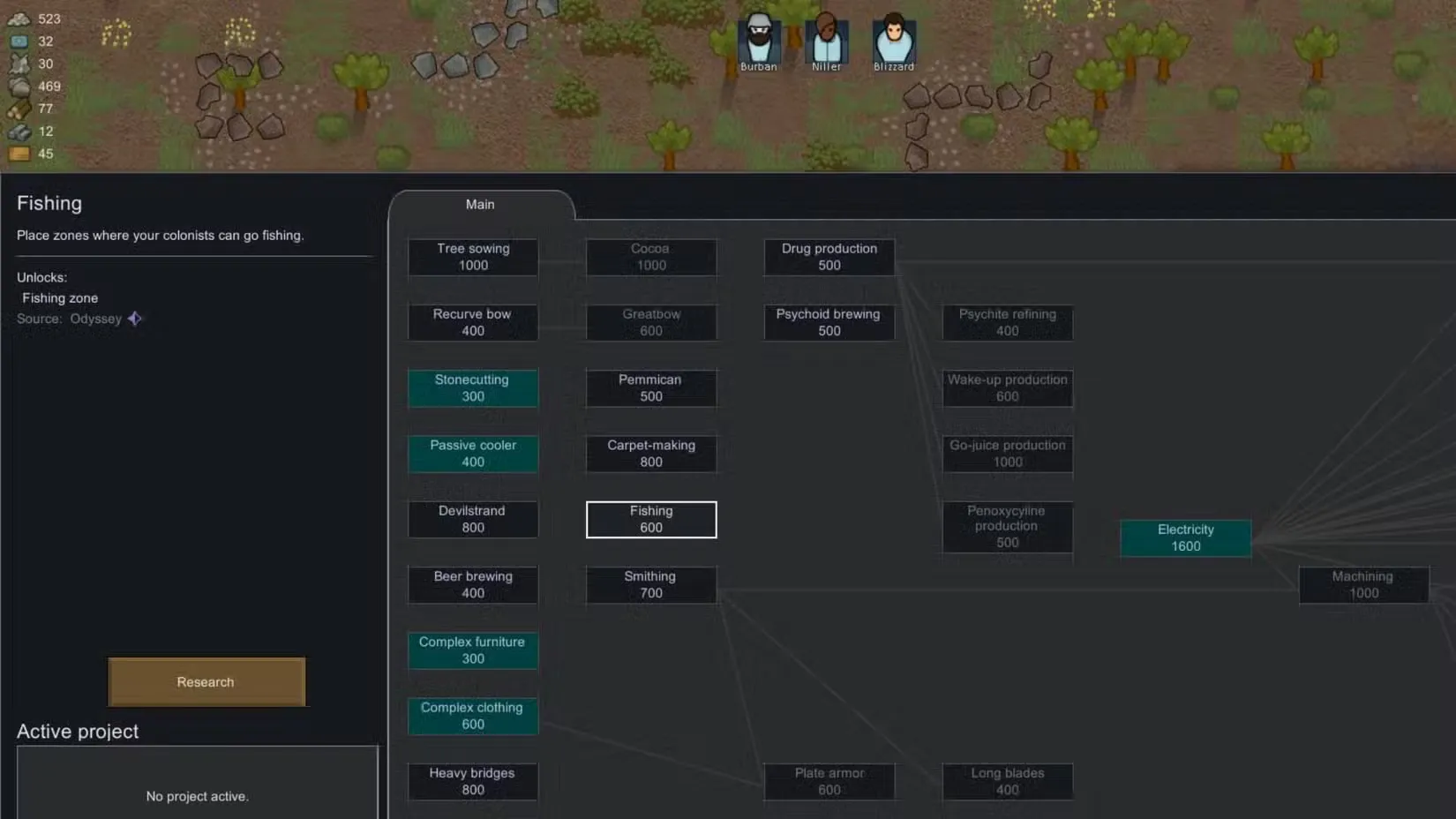
Mid-game Odyssey play rewards practical technology over luxury. Research that improves efficiency, preservation, and medical care provides more value than aesthetics.
Focus on:
- Food preservation and efficiency
- Lightweight armor and weapons
- Medical improvements
- Mobility and crafting upgrades
Avoid tech paths that require heavy infrastructure unless you plan a long-term settlement phase.
Late-Game Optimization and Long-Term Goals
In the late game, Odyssey becomes about sustainability and narrative payoff. Colonies that survive this long should have strong internal cohesion and adaptable systems.
Decide whether to settle permanently, complete a grand journey, or pursue a high-risk endgame objective. Align your playstyle with your colonists’ strengths and story arcs.
Late-game success is less about perfection and more about survival through accumulated smart decisions.
Conclusion
RimWorld: Odyssey transforms the classic colony simulator into a journey-driven survival experience where planning, adaptability, and emotional management matter more than static optimization. The constant movement forces players to rethink how they value resources, colonists, and time.
By focusing on flexible strategies, efficient logistics, and colonist well-being, players can navigate the harsh unpredictability of Odyssey and create unforgettable emergent stories. Mastering these tips and guides will help ensure your colony survives not just one base—but the entire journey.
160-Character Summary:
RimWorld: Odyssey tips and guides covering mobile survival, travel planning, colonist needs, combat, trading, and long-term strategy for journey-based gameplay.